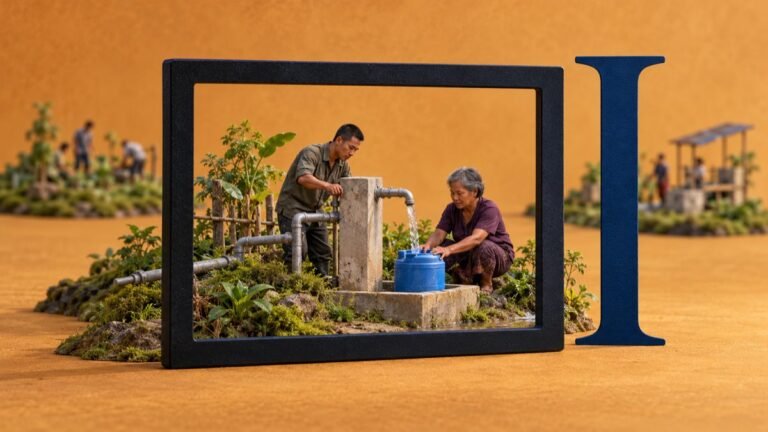
UN SDG 1 is simple – No Poverty. It’s simple in words, but in deeds, of course, it’s complex. Companies, for their part, should contribute to this end out of respect for human rights. Yet, in doing so, they can improve their worth in society and, in some cases, improve the bottom line.
Companies are profit-seeking enterprises as a matter of course. How they achieve that, however, can damage or benefit society. If you subscribe to conventional capitalism, your company can do a lot to alleviate poverty.
No Poverty – this article addresses some things your company can do and how it will help you.
- What is SDG 1 “No Poverty” about?
- How does SDG 1 relate to business?
- SDG 1 for CSR/CSV, an example: Visa
- 5 ways to use SDG 1 to advance your company
- 1.1) Eradicate extreme poverty (living on less than US$3/day)
- 1.2) Reduce poverty by at least 50% (per national definitions)
- 1.3) Implement social protection systems
- 1.4) Equal rights to ownership, basic services, technology, and economic resources
- 1.5) Build resilience to environmental, economic, and social disasters
- Takeaways
- SDG 1 – No Poverty: But read between the lines
What is SDG 1 “No Poverty” about?
SDG 1 aims to end poverty in all its forms, not just income, and is the widest-ranging and inclusive of the SDGs. It also provides many opportunities for companies to protect their future profitability.

Globalization in terms of investment, technology, and supply chains has created a large middle class in the developing world. This has lifted an unprecedented number of people out of poverty (living on less than US$3 per day).
Well over a billion people have left extreme poverty since 1990, but progress has stalled. The UN’s SDG Report 2026 puts the global extreme poverty rate at 10 percent, only three percentage points below the 2015 level. In June 2025 the World Bank raised its international poverty line from US$2.15 to US$3 a day, which added about 125 million people to the count, and it estimates roughly 800 million people live below that line. COVID-19, the war in Ukraine, and rising inflation reversed some earlier progress. Poverty also makes people more vulnerable to climate change, which increases environmental risk.
How does SDG 1 relate to business?
SDG 1 relates to business in four main ways:
- Growth
- Risk
- Capital
- Purpose
Poverty means less purchasing power and smaller markets for goods and services, as well as a smaller pool of healthy, qualified, and productive people available for employment. This limits a company’s potential to grow, diversify by developing new products or services, and achieve scale economies.
It also raises the risk of economic and political instability, especially for operating a business in a developing country, but also for supply chains and markets for companies in developed countries. Failing societies are generally bad for business.
This can threaten a company’s long-term survival or profitability and also its ability to raise capital for investment.
A growing number of investors now expect companies to operate sustainably and be purpose-driven. If they don’t, they risk their reputations and limit their access to capital.
SDG 1 for CSR/CSV, an example: Visa
Financial services multinational Visa operates in 200 countries and territories. The company saw an opportunity to help the SDG 1 goal of “no poverty” by helping bridge the so-called digital divide. Per this divide, there’s a broad gap between those with access to modern information technology and those without. Among those without are the 1.3 billion adults who still lack a financial account, according to the World Bank’s Global Findex 2025.
The company’s corporate responsibility and sustainability reporting addresses SDG 1 through financial inclusion, with commitments that include:
- Give 500 million unbanked people the ability to make payments with Visa-branded accounts (this was achieved in 2019)
- Enable 50 million small-sized and micro-businesses to make and receive digital payments by the end of 2023 (exceeded: nearly 67 million)
- Pay their employees a competitive, fair, and living wage
Visa reported in its 2023 sustainability report that it exceeded the small-business goal, reaching nearly 67 million. While the last commitment should go without saying, it still warrants mention in annual reports and ESG-type reports, as so many companies, in fact, do not pay competitive wages.
5 ways to use SDG 1 to advance your company
While all the SDGs have overlapping aspects, SDG 1 may have the widest scope of the 17 SDGs since poverty encompasses so many dimensions.
Its five sub-goals provide businesses with five ways to become better at achieving their growth potential and retaining their license to operate. They can also help raise capital by addressing the needs of all stakeholders, including government, employees, and shareholders.
Businesses can follow the targets of SDG 1, using them as a guide to their actions.
Based on the sub-targets, they can refocus their CSR programs, investments, operations, and supply chains.
1.1) Eradicate extreme poverty (living on less than US$3/day)
Businesses can address these targets in numerous ways. A simple way starts with human capital already present in the company – raise wages so they’re in line with modern living standards. Visa, as mentioned above, claims it has committed to paying employees a fair and sustainable wage.
1.2) Reduce poverty by at least 50% (per national definitions)
A company can change its procurement and supply chain to include local suppliers, especially in agriculture, which is usually a low-wage and low-skill sector. This creates jobs and higher incomes, and it reduces poverty.
1.3) Implement social protection systems
In addition, a company can offer benefits to its employees, such as health insurance, thereby widening the social safety net. This also helps make people more resilient to economic and social disasters.
1.4) Equal rights to ownership, basic services, technology, and economic resources
A company can identify and supply poor areas with basic services, such as electricity.
For example, the IEA estimates that about 730 million people still live without electricity. Iberdrola, one of the world’s largest electric utilities, aims to bring electricity to 16 million people in developing countries by 2030. It calls this its “Electricity for All” Program and reports 15.99 million people reached from 2014 through the end of 2025.
They have the power to supply it, and they aim to distribute it equitably. Well done. But hold them to account for it.
1.5) Build resilience to environmental, economic, and social disasters
A company can develop new products that make them less reliant on scarce resources such as water. For example, Unilever developed a new washing powder that needs less water. This means women in the developing world spend less time collecting water and more time studying, finding a job, working, or on childcare.
Takeaways
- SDG 1 covers poverty in all its forms. The extreme poverty line is now US$3 a day, and the UN’s 2026 report shows little movement since 2015.
- Poverty shrinks markets and labor pools and raises political risk, so it affects a company’s growth, risk, access to capital, and purpose.
- Each of the five sub-targets matches something a company controls: wages, procurement, employee benefits, basic services, and products that need fewer scarce resources.
- Visa (nearly 67 million small businesses enabled) and Iberdrola (15.99 million people reached against a 16 million goal) publish measurable targets. Check any company’s claims against its own reports.
- Compare a company’s virtuous acts with its profits and executive pay, and watch for greenwashing.
SDG 1 – No Poverty: But read between the lines
Many companies will promote their virtuous acts. Some are indeed virtuous. Others are small next to corporate profits, dividends, and executive pay. Always keep the greenwashing notion in mind.
Most of all, in your company, do no harm. Do good. Use the SDGs as a guide and be honest about if you’re truly delivering sustainable value.
If you are, MacroLingo is here to work with you. However technical the subject, we will communicate your ideas in clear and honest English the world can understand. We’ll localize your content and glocalize your content. We’ll get you seen. Find out what we can do for you.