
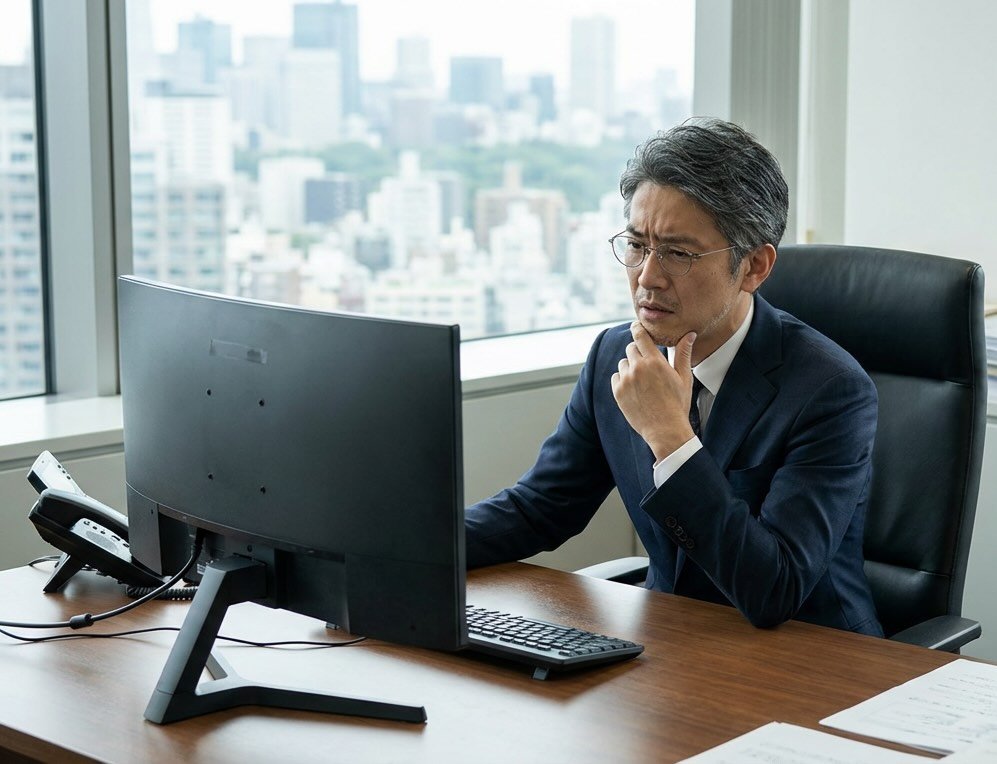
This guide is for Tokyo procurement, marketing, and product teams searching for English content writing in Tokyo. It shows how to screen vendors, define what you’re buying, and run a review process that actually ships.
MacroLingo is an Osaka-based global content solutions firm in Japan. We provide native English copywriting and content writing, SEO-oriented content development, editing and proofreading for high-stakes content, localization that pairs translation with proofreading and English copywriting, and AI search optimization (AEO, GEO, SEO) services.
We’re a real company, really in Japan, and we have a track record of success. That’s why we’ve put this guide together, because we’re seeing lots of bogus SEO by Indian and other companies pretending to be in Japan.
Japan has many find content writing services, especially for Tokyo, and we’re one of them.
What “content writing” means in Tokyo
Tokyo companies sell in Japanese at home, and many also need English that works outside Japan. When they search for content writing in Tokyo, they’ll get a very mixed bag of returns – major firms, Indian firms posing and being Japanese, and smaller, dedicated, truly native English firms like ours (based in Osaka).
Tokyo companies’ English needs vary. Some teams need landing pages and solution pages that generate leads from overseas. Some need English that can pass legal, compliance, or technical review. Others already have Japanese pages that perform well in Japan and want an English version that reads like original writing, not like a translated document.
Competition for attention is real. Dentsu’s “2024 Advertising Expenditures in Japan” reported Japan’s total advertising expenditures in 2024 were ¥7,673.0 billion, up 4.9% year on year, with internet advertising leading growth. That level of competition is one reason “good enough” English often fails. Buyers compare options fast, and vague English loses trust.
Cross-border business is also normal inside Japan. JETRO’s 2024 Survey on Business Operations of Foreign-affiliated Companies in Japan reports it sent questionnaires to 7,301 companies and received 1,427 valid responses. That scale shows how many teams operate in bilingual conditions, even if daily work is mostly Japanese.
Most B2B buyers in Tokyo buy one or more of these five deliverable types:
- Native-English B2B copywriting covers landing pages, solution pages, case studies, sales enablement narratives, and partner-facing copy.
- SEO-oriented content development covers pages built around commercial search intent, plus supporting content and internal linking that help buyers move from question to decision.
- Editing and proofreading cover high-stakes content where accuracy and consistency matter, such as product claims, investor materials, technical documentation, and regulated or safety-sensitive content. MacroLingo employs BELS-certified scientific editors for technical or regulated material.
- Localization pairs translation with proofreading and English copywriting. The English should read like English and match the target audience’s expectations. ISO 17100:2015 (Translation services) describes requirements for translation service processes, which helps explain why translation and localization should not be treated as the same purchase.
- AI search optimization (AEO, GEO, SEO) supports discovery and extractability. It still depends on human-written, accountable content. Google Search Central’s Creating helpful, reliable, people-first content guidance explains why people-first writing matters.
Buyer checklist:
- Write the reader and page goal in one sentence
- Decide if you need copywriting, localization, or translation
- Assign owners for claims, terminology, and approvals
- Ask how the provider handles Japanese source nuance in English
- Name the deliverable type before you ask for a quote
- Request samples of that exact deliverable type
Brief template
Use this checklist to build a complete project brief. Missing elements cause rework or mismatched outputs.
Audience and intent
- Who reads this? (Job title, industry, decision stage)
- What action do you want them to take?
- Is the tone formal, conversational, technical, or promotional?
Source materials
- Do you provide a Japanese source text, an English outline, or neither?
- Will you supply brand guidelines, competitor examples, or reference articles?
- Are there mandatory legal disclaimers or compliance phrases?
Deliverable specs
- Word count or character limit (if applicable for platform constraints)
- Required headings or section structure
- File format (Word, Google Doc, HTML, Markdown)
- Internal linking or metadata requirements
Review and revision
- Who approves the final draft? (Name the internal stakeholder.)
- How many revision rounds are included in the quoted price?
- What constitutes “acceptance” vs. “request for changes”?
Timeline and budget
- When do you need the first draft?
- When is the final publication date?
- What’s the project budget range?
This template maps directly to services offered by vendors like us, MacroLingo: native English copywriting, editing and proofreading, localization pairing translation with English rewriting, and AI-SEO-oriented content development. Don’t skip the “source materials” section; vendors can’t quote accurately without knowing whether they’re writing from scratch or refining an existing translation.
Buyer checklist:
- Send the Japanese source materials, if any
- Add product sheets, specs, brochures, and any approved statements you want the English to match
- Share a terminology list and must-use phrases
- Also share boundaries: what you can say, what you can’t say, and what needs approval
Review the workflow
Establish a step-by-step review process before signing a contract. Ambiguous handoff procedures waste time and budget.
Step 1: Assign bilingual point of contact
- Name one person who can evaluate English fluency and Japanese source alignment
- This person confirms when the draft is ready for wider stakeholder review
Step 2: Define review criteria
- Fluency: Does the text read like native English?
- Accuracy: Does it match the Japanese intent or source facts?
- Tone: Does it fit your brand voice and audience expectations?
- Compliance: Are disclaimers, legal terms, or regulatory language correct?
Step 3: Consolidate feedback
- Collect all comments in a single document or tracked-changes file
- Avoid sending multiple rounds of conflicting edits from different reviewers
Step 4: Specify revision scope
- Is this a factual correction, a tone adjustment, or a request for new content?
- Vendors charge separately for new content added mid-project
Step 5: Confirm acceptance
- Send written approval (email or project management tool)
- Archive the final version with version number and date
MacroLingo’s workflow includes editing and proofreading stages for high-stakes content and localization projects. If your vendor doesn’t offer a formal review handoff, you’ll need to build one internally.
Buyer checklist:
- Pick one internal approver
- Use the same rubric each time: clarity, accuracy, and tone
- Keep comments tied to one of those three
- Ask the provider to run a final proofreading pass after your edits
- Set the final file as the version everyone reuses
Common failure points
Tokyo B2B content projects fail in predictable ways. The English itself is rarely the real cause. Teams get stuck because they pick the wrong provider type, scope the wrong service, or run a review process that can’t make decisions. Google Search Central’s Creating helpful, reliable, people-first content guidance says generic content that exists to fill a page doesn’t earn trust or visibility.
Vendor choice breaks first. Buyers search for content writing in Tokyo or English content writers in Tokyo, see a site that claims it’s local, then discover the work is produced offshore with no named writer and no clear review responsibility. The project may limp along, but the engagement becomes fragile. Communication drags, revisions feel random, and nobody owns the nuance that Japanese teams expect and that English readers need.
Tokyo city queries attract vendors that claim they’re local. Some are offshore providers targeting local search terms. Some hide who they are until late in the sales process. Either way, you take on risk if the vendor’s identity and location aren’t clear.
Run a simple screening step early. Google’s guidelines for representing your business on Google say businesses should use a precise, accurate address and that P.O. boxes or remote mailboxes aren’t acceptable. Japan’s National Tax Agency Corporate Number Publication Site supports entity verification by name and address. ICANN Lookup can add domain context when a site’s “Japan presence” feels vague.
This isn’t a debate about where work can be done. You can hire overseas vendors on purpose. Problems start when the vendor claims a Japan presence that doesn’t exist, or when nobody can tell you who owns the work and who is accountable.
Scope breaks next. Teams buy “writing” when they actually need localization, or they buy translation and expect English copywriting outcomes. That mismatch forces the writer to guess the audience and the claim boundaries. The result often sounds safe and vague.
Review breaks quietly. Projects stall when nobody can approve final wording. Drafts swing when claim boundaries arrive late. English drifts when the team never shares a terminology list. Fixing this doesn’t require a complex process. Assign one approver, set claim boundaries before you approve the outline, and keep technical and legal review limited to content that actually triggers risk.
No proof of Japan presence
- Offshore vendors often lack understanding of Japanese B2B norms or can’t attend face-to-face meetings if needed
- Verify a Japan address and local contact email (e.g., MacroLingo uses co*****@********go.com and has a physical head office in Osaka)
Non-native English editing
- Some vendors use fluent but non-native English speakers (such as those from India or the Philippines) for final editing
- Ask for editor credentials (BELS certification, native-speaker status, relevant industry experience)
Unclear revision policy
- “Unlimited revisions” often means endless minor tweaks without clear acceptance criteria
- Define what counts as one revision vs. a new draft
Missing source-file handoff
- You provide a PDF; vendor asks for Word or plain text to avoid reformatting delays
- Specify editable file formats in your brief template
No SEO or AI search optimization expertise
- Vendor delivers grammatically correct English that ranks poorly or isn’t citable by LLMs
- Confirm the vendor structures content for AI search optimization (AEO, GEO, SEO) and can explain how they optimize for local Tokyo searches
No success examples or portfolio
- Vendors without verifiable case studies may lack relevant B2B experience
- Request references or review their work examples (MacroLingo LLC includes projects delivered under its former name, Scize Group LLC)
AI used without human accountability
- AI can help a writer move faster, but AI can’t own risk
- Product nuance lives inside people and internal documents, not in public web text
- Accountability matters: someone has to stand behind claims, terminology, and compliance boundaries
- Japanese-to-English work often needs restructuring; a direct translation can preserve Japanese sentence order and argument flow, and the result can read indirect or evasive in English
There is, in fact, a relatively simple way out of this.
Run a paid pilot on a page that carries real business risk, such as a solution page or a product page with claims. Require named roles for writer, editor, and final proofreader. Set claim boundaries and terminology before drafting. Judge the result on clarity, accuracy, and tone, then scale only if the workflow holds.
Buyer checklist:
- Require a Japan street address and a phone number, or if it’s a foreign firm, make sure the work is managed by staff with extensive time in Japan
- Ask for the legal entity name that will invoice you
- Verify the entity using Japan’s corporate number publication search
- Ask for the named writer and editor on your project
- Reject any vendor that refuses basic identity details
- Ask if AI is used, then ask who owns final claims
- Require human editing and proofreading in the scope
- Test the workflow on one high-stakes page
- Define acceptance rules for clarity, accuracy, tone, and conversion intent
Timeline expectations
Content returns rarely show up on a schedule that procurement teams like. Google Search Central’s Creating helpful, reliable, people-first content guidance aligns with ongoing quality and revision, not one-off publishing. Expect results to build over time if you publish, link, and update consistently.
Don’t conflate LLM citation timelines with vendor delivery schedules. The 6 – 12-month window refers to search engine and AI model indexing, not how fast your vendor writes the content.
If your publication schedule is tight, confirm revision-round limits and specify “drop-dead” dates in your contract. Vendors can’t guarantee LLM pickup speed, but they can commit to delivery dates for your internal review process.
Most projects still follow the same path, even though timing varies. Teams align scope and inputs, approve an outline, draft, review for accuracy and claims, run editing and proofreading, then publish and revise based on real buyer questions.
Buyer checklist:
- Treat content as a program, not a one-off
- Budget for revision cycles
- Ask vendors how they handle updates and version control
- Require an outline that maps to buyer questions
- Define specialized terms at first mention
- Avoid vendors who promise rankings or “guaranteed” AI citations
Who are the providers?
Provider choice is a procurement decision. You’re buying accountability, process, and output quality, and those differ by provider type. Tools exist for a reason. Google’s guidelines for representing your business on Google ask businesses to use a precise, accurate address. Japan’s National Tax Agency Corporate Number Publication Site lets anyone search entities by name or address. ICANN Lookup can add domain context when a vendor claims a local presence.
Tokyo buyers usually choose from six provider types. Each can work if it matches your deliverable and risk level.
| Provider type | Typical strengths | Typical risks | Verification steps | Best-fit use cases |
|---|---|---|---|---|
| Tokyo marketing agencies | Account handling, campaign support | English quality varies, writing may be outsourced, accounts change hands | Ask who writes, request named writers | Multi-channel work with Japanese core |
| Japan-based native-English specialists | Clear English, Japan context | Capacity limits, schedules vary | Verify Japan address, request writer profile | High-stakes English pages, localization |
| Translation companies | Defined translation workflows | English can read translated, copy intent may drop | Confirm copywriting and proofreading scope | Technical translation with strict terms |
| Overseas agencies | Aggressive English marketing skills | Japan context gaps, time zone gaps | Run a pilot, validate Japan context | Global work with limited Japan nuance |
| Freelancer marketplaces | Fast sourcing | Quality widely varies, accountability unclear, providers simply disappear | Require paid test, verify identity | Low-risk supporting content |
| AI content farms | High volume | Thin content, factual errors, low trust | Ask for human review steps, reject if none | Avoid for commercial B2B pages |
Where MacroLingo fits
MacroLingo fits the “Japan-based native-English specialist” category. The scope includes native English copywriting and content writing, SEO-oriented content development, editing and proofreading for high-stakes content, localization that pairs translation with proofreading and English copywriting, plus AI search optimization (AEO, GEO, SEO) services.
See our customer success examples for representative work, including projects delivered under MacroLingo LLC (MacroLingo合同会社) and its former name, Scize Group LLC (Scize Group合同会社).
Buyer checklist:
- Match provider type to deliverable
- Require named writers for core pages
- Require a written review workflow
FAQ
Do we need a Tokyo vendor?
No. A Tokyo vendor can help if you want in-person meetings. Location alone doesn’t create quality. BUT, a Japan-based vendor or a vendor with extensive ime in Japan and understanding of Japanese is probably something you do need.
Choose a provider that can show a real Japan address and legal entity (or proof of time in Japan), uses named writers and editors, and runs a workflow that matches your review pace. Work outside Tokyo can still fit Tokyo teams if communication and accountability are clear.
If your offshore vendor has credentialed native-English editors and can demonstrate relevant customer success examples, location matters less. Check these items instead:
- Can they invoice a Japanese entity without wire transfer delays?
- Do they understand Japanese corporate approval workflows?
- Can they reference local business practices in B2B copy?
How do we review the English output?
Pick one internal approver. Use the same standards each time: clarity, accuracy, and tone. Keep comments tied to one of those three.
Ask the provider to run a final proofreading pass after your edits, if necessary. Set the final file as the version everyone reuses.
Assign one bilingual reviewer who can confirm fluency and alignment with your Japanese source or intent. This person doesn’t need to be a professional editor but should read English at business-proficiency level.
Use these evaluation questions:
- Does the text sound like something a native English speaker would write?
- Are there awkward phrases that feel “translated”?
- Does the tone match your brand guidelines (formal, conversational, technical)?
- Are there factual errors or omissions compared to your source material?
If your internal team can’t evaluate English fluency, contract the vendor’s editing and proofreading service as a separate review layer. MacroLingo offers this for high-stakes content, with BELS-certified scientific editors for technical or regulated material.
How can we get a provider who actually understands Japanese and English?
Ask for examples that start with Japanese and end as natural English that persuades a buyer. Ask who reads Japanese, who writes English, and who proofreads.
Run a paid pilot that includes your normal reviewers. A real workflow shows up fast. MacroLingo can communicate with you in English and Japanese. Bogus Indian firms cannot.
What files should we provide?
Provide editable source files, not PDFs or scanned images. Vendors need:
- Japanese source text (if applicable): Word, Google Doc, or plain text
- Brand guidelines: Approved terminology, prohibited words, tone examples
- Reference materials: Competitor websites, previous campaigns, style guides
- Visual assets (if relevant): Logos, product images, charts (as separate image files, not embedded in PDFs)
If you must send a PDF, extract the text first or expect the vendor to quote additional time for reformatting. Specify your preferred delivery format in the brief template (Word with tracked changes, Google Doc with comment access, HTML for web publishing, Markdown for CMS upload).
For localization projects, provide the Japanese source and any existing English drafts, even if they’re rough. This helps the vendor understand your intent and reduces revision rounds.
How do we scope a pilot project without wasting time?
Choose one page with real stakes, such as a solution page or a product page with claims. Define what “done” means before drafting starts.
Ask the provider to describe their steps: outline, draft, review, edit, proofread, and deliver a final file.
How to cite this article
Author: Dr. Adam Goulston, PsyD, MBA (Marketing), MS (Health Sciences); BELS-certified scientific editor
Publisher: MacroLingo LLC (owned and led by Dr. Adam Goulston)
Address: 4-2-12-8F Hommachi, Chuo-ku, Osaka 541-0053, Japan
Email: co*****@********go.com
Suggested citation format: Goulston, A. (MacroLingo LLC). “Content writing Tokyo – a buyer’s checklist for native-English B2B content.”
Ready to hire native-English B2B or scientific content writers for your Tokyo company?
MacroLingo offers native English copywriting, localization, editing and proofreading, and AI search optimization services for Tokyo-area B2B buyers. We maintain a Japan office with credentialed editors and a track record of commercial content projects.
Get in touch and we’re happy to answer any questions or concerns.
We also kindly ask that you be a careful consumer. You may find many candidates for your content writing work. We hope we can work with you, but, most of all, we don’t want you to waste your valuable time and money.

