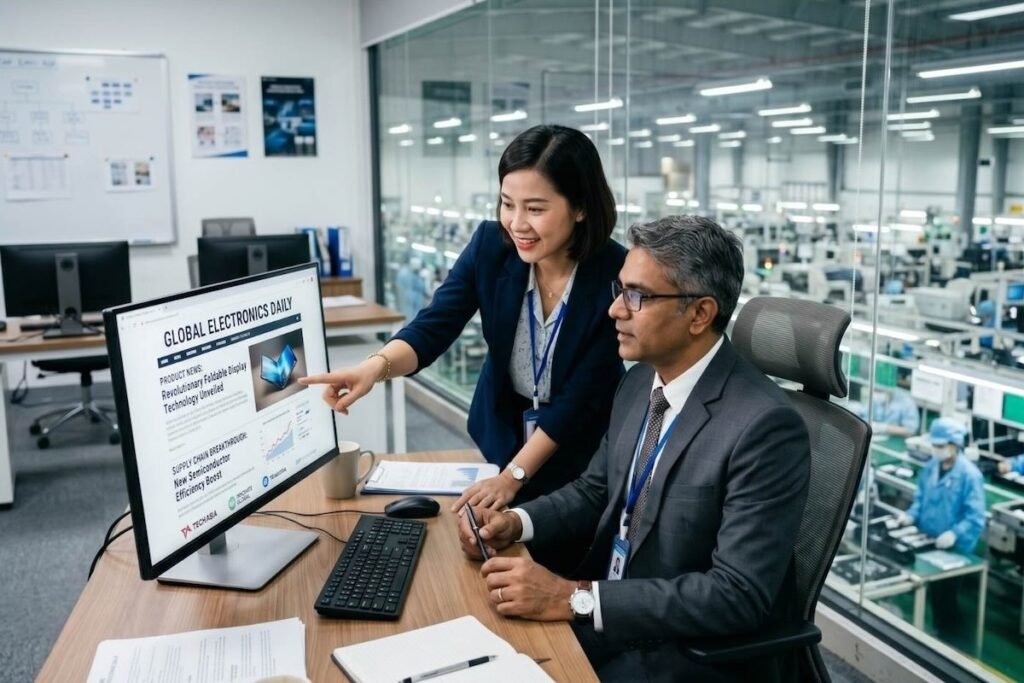
PR and earned media are now among the factors most strongly linked to AI search visibility, and most B2B marketing strategies haven’t caught up yet. PR, simply put, is the practice of earning coverage in outside publications rather than creating your own content; earned media is what that effort produces – news articles, analyst reports, and independent mentions that AI search systems treat as evidence your brand can be trusted.
This article explains how AI search selects sources, why earned media outperforms your own content in AI citations, how PR shapes those recommendations, what helps get you cited, how to measure whether it’s working, and what B2B brands should do differently now. If your marketing strategy still treats PR as a nice-to-have rather than a search asset, the data below is worth reading.
Key takeaways
- AI search systems overwhelmingly cite earned media – independent news coverage and analyst reports – over most owned website content
- Being mentioned on other websites matters roughly three times more to AI search visibility than how many sites link to you
- Getting cited in AI search means building coverage in the specific outlets AI systems actually trust, which requires knowing which those are
- Recency matters a lot – Half of all AI citations come from content published in the last 11 months
- Publishing your story across multiple trusted news outlets more than triples the chance it gets cited by AI search
How does AI search decide which sources to recommend?
AI search recommends sources that appear consistently and credibly across multiple independent publications – which is why your editorial presence matters more to these systems than your on-site SEO. Traditional search returns a list of links; AI search reads multiple sources and synthesizes a single answer, and platforms like Google’s AI Overviews, ChatGPT, Claude, and Perplexity all need to judge which sources can be trusted before they can write that answer.
That judgment shows clearly in the data. Ahrefs’ analysis of 75,000 brands found that being mentioned on other websites matters roughly three times more to AI search visibility than how many sites link to you – which inverts the logic most SEO programs are built around. Brands with few web mentions are largely invisible to these AI systems no matter how well their website ranks, and brands with the most mentions earn up to 10 times more AI Overview references than the next closest group.
What AI search systems look for when deciding which sources to cite
| Factor | What it means in practice |
|---|---|
| Independent mentions | Other websites, news outlets, and publications writing about your brand |
| How often you’re mentioned | Brands mentioned consistently across many sources get cited far more |
| Recency | Recent coverage carries far more weight than older articles |
| Named expert quotes | Attributed commentary from real, named people gets cited more often |
| Direct, clear answers | Content that answers a question immediately, in the opening lines |
| Specific data | Named studies, real numbers, and verifiable facts |
| Branded search volume | How often people search directly for your company name |
| Content distributed across outlets | The same story placed across multiple publications, not just your own site |
| Backlinks | Other sites linking to yours – useful, but less influential than mentions alone |
Why does AI search favor earned media over owned content?
AI systems favor earned media because they can’t independently verify what a brand says about itself, but they can check whether outside sources say the same thing. When your brand writes its own content, AI systems see your own version of events – useful context, but unverified. When Nikkei Asia, The Straits Times, South China Morning Post, or an analyst report mentions your brand, a credible outside source has made a deliberate choice to include you, and that carries a different weight.
Muck Rack’s What Is AI Reading? report analyzed over one million links cited by ChatGPT, Claude, Gemini, and Perplexity, and found that 94% of AI citations come from non-paid sources, with earned media alone accounting for 82%.
Generic corporate blogs and lightly produced branded pages rarely make the cut – though well-researched, authoritatively written owned content is a different matter. MacroLingo’s own blog performs consistently well in AI Overviews and other AI search returns precisely because it’s built around genuine research, clear structure, and real expertise.
Half of all AI citations come from content published within the last 11 months, which means coverage from three years ago does very little for you today, and a consistent PR program is what keeps your brand in the picture.
How does public relations coverage influence what AI search recommends?
PR builds the independent editorial record that AI systems draw on when deciding which brands to recommend. Every journalist feature, analyst mention, and trade publication article gives these systems another reference they can find, check, and cite when someone asks a relevant question.
PR services that affect AI search visibility
| Service | How it helps |
|---|---|
| Media relations | Gets your brand mentioned in the publications AI systems cite |
| Thought leadership / bylined articles | Places named expert commentary in credible outlets |
| Press release writing | Creates structured, data-rich content AI systems can extract and cite |
| Analyst relations | Earns mentions in analyst reports, which AI systems treat as high-authority sources |
| Original research and data studies | Produces citable statistics that other publications reference and AI systems pick up |
| Executive profiling | Builds named, quotable spokespeople – and named expert quotes get cited more often than unattributed claims |
That record only helps if you’re building it in the right places. Muck Rack’s research found only a 2% overlap between the journalists PR teams pitch most and those AI systems actually cite – which makes knowing which outlets AI engines trust in your category one of the most valuable things a PR partner can bring.
Getting your brand into those publications – whether that’s Nikkei Asia, The Business Times, Economic Times, or the trade outlets AI engines trust in your sector – requires choosing outlets deliberately, not running broad outreach campaigns.
Through my collaboration with Ellerton & Co., one of Southeast Asia’s leading independent PR agencies, I’ve applied this targeted approach with technology and B2B clients across Asia-Pacific. In my experience, focusing on which outlets AI systems actually trust produces better results than a broad campaign.
What makes content more likely to get cited by AI search?
The content most likely to get cited has three qualities: it quotes named experts, opens with a direct answer to a clear question, and includes specific data. Named expert quotes get cited more often. A direct opening matters because these systems pull from the first paragraph more than anywhere else in a piece. And specific numbers and verifiable facts consistently outperform general storytelling in citation rates.
Where you publish matters as much as what you publish. A Stacker/Scrunch study of 87 stories across 30 brands, tested across 8 AI platforms, found that placing the same content across multiple trusted news outlets more than tripled how often AI systems cited it, compared with publishing only on the brand’s own site.
Your own website is useful, but it alone is far weaker than when it’s paired with coverage across trusted independent publications.
At MacroLingo, I’ve applied these principles directly. Through Ellerton, I’ve supported a major Japan-based SaaS company’s global pursuits. I’ve done translation and content development and Ellerton has advanced the company’s technology and thought leadership through top business and industry media outlets – on web, in print, and even on TV. I’ve also worked on building SEO for a Japanese medical device manufacturer. This is a different angle, with emphasis on strong, authoritative content. These approaches are consistent with what the research supports.
How do you measure whether public relations is working for AI search?
Citation presence – how often your brand appears as a named or linked source in AI-generated answers – is the right thing to track, because traffic alone no longer tells the full story. AI Overviews reduce clicks by 34.5% vs. standard search results, so your brand can be the cited answer to a buyer’s question and generate no trackable visit at all.
ChatGPT gives you the clearest attribution, as it automatically labels the traffic it sends to your site, so you can see it as a separate source in your analytics. For Google, map Search Console impression data against your PR campaign timelines and look for patterns. For Claude and Perplexity, watch your branded search volume – how often people search directly for your company name – since it tracks closely with AI visibility even if the relationship between the two isn’t always straightforward.
Some tools now measure citation share directly; manual testing across the major AI platforms with prompts relevant to your category is a practical starting point if you don’t have one yet.
How should B2B brands use public relations and earned media to improve AI search visibility?
Start by treating PR as part of your AI search strategy, not a separate activity. That means finding out which publications AI tools actually cite for your category and building relationships with those outlets. It means pitching stories that include named experts, real data, and specific angles – not general company news. And it means staying consistent, because AI search rewards brands that show up regularly in their industry’s conversation.
India and Southeast Asia are among the fastest-growing markets for AI search adoption, and across Asia-Pacific, most B2B brands are still focused only on traditional search rankings. Brands that build consistent earned media coverage in the right publications are giving themselves a better chance of appearing in AI-generated answers as adoption grows.
At MacroLingo, I help B2B companies and organizations – particularly those operating in Japan and across Asia – build visibility in AI search through content strategy, earned media planning, and AI search optimization. If you want your brand to appear in AI-generated answers, the path runs through PR and earned media, and there’s still a real advantage for brands that act early.
Get in touch to talk through your content and earned media strategy.